
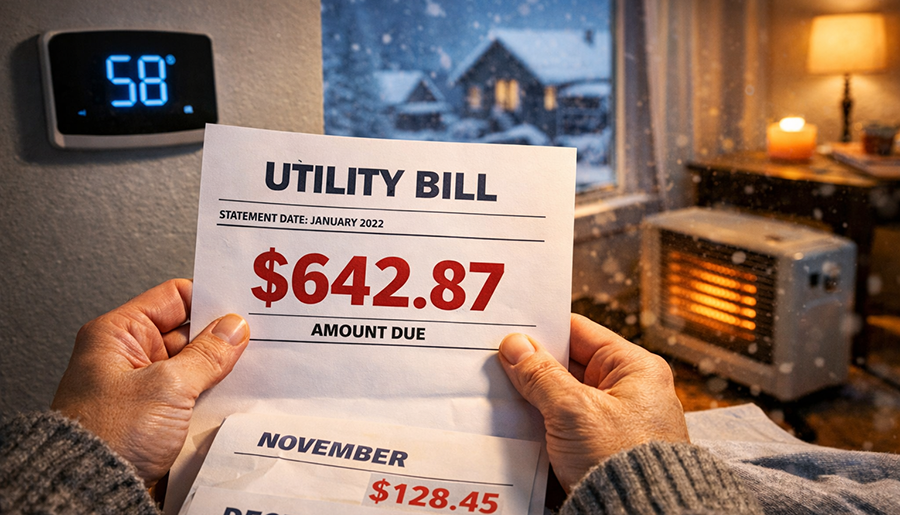
It’s the third week of January. You open your utility bill, expecting it to be higher than usual because yeah, winter, but nothing prepares you for the actual number staring back at you. It’s double what you paid in December. Triple what you paid in November. You immediately wonder if there’s been some kind of billing error.
At Southeastern Mechanical Services, we field panicked calls about January bills every single year. And honestly? There usually isn’t a billing error. January really is that expensive for heating in North Alabama. But understanding why helps you do something about it.
The January Perfect Storm
January isn’t just cold. It’s consistently cold in a way that October, November, and even December usually aren’t. Your heating system runs more, sure, but that’s only part of the story.
December’s Mild Stretches Are Over
Think back to December. We probably had at least a few days in the 50s or 60s where your heat barely ran at all. Those mild stretches keep your December bill reasonable. January doesn’t give you those breaks. When your low temperature is 28 degrees and your high is 45, your system is running pretty much constantly.
The Coldest Nights Hit Hardest
It’s not just that January is cold. It’s that January nights in Decatur regularly drop into the teens or low 20s. Heat pumps struggle at these temperatures, often switching to expensive backup heat. Furnaces run longer cycles to keep up. Either way, you’re burning through energy at the worst possible time.
Holiday Recovery Mode
December gets a pass on heating costs because nobody’s home much. You’re at holiday parties, visiting family, traveling for Christmas. Your thermostat is set lower more often. January? Everyone’s back home, back to work, back to normal routines. Your house is occupied and heated to full temperature for longer periods.
Your System is Working Overtime
According to the Department of Energy, heating accounts for about 29% of the average home’s energy use. In January, that percentage climbs significantly because your system is fighting a losing battle against heat loss.
When it’s 70 degrees inside and 25 degrees outside, heat wants to escape. It pushes through your walls, leaks around windows, escapes through your attic. Your heating system has to replace all that lost heat constantly, not just bring your house up to temperature once.
And here’s the kicker: the colder it gets outside, the harder your system works for each degree of heat it produces. A heat pump at 40 degrees outside operates maybe 3-4 times more efficiently than the same heat pump at 20 degrees. That efficiency drop hits your bill directly.
The Hidden Energy Wasters
Some of your January bill spike has nothing to do with outdoor temperature. It’s your house actively sabotaging your budget.
Attic Insulation That’s Settled
That insulation installed 15 years ago? It’s probably compressed and settling, leaving gaps. Heat pours right through your ceiling into the attic, where it does absolutely nothing for your comfort. You’re basically heating the outdoors.
Ductwork in Unconditioned Spaces
If your ducts run through your attic or crawlspace (and most Decatur homes have ducts in one or both), they’re losing heat to cold air before it ever reaches your living space. Energy Star notes that sealing and insulating ducts can improve efficiency by up to 20%, which translates directly to lower bills.
Air Leaks You Can’t See
The obvious air leaks around windows and doors? Those are annoying but honestly not your biggest problem. The real culprits are hidden: recessed lights in your ceiling, gaps where plumbing enters walls, the space around your attic access, electrical outlets on exterior walls. These invisible leaks add up to leaving a window open 24/7.
Your Water Heater Working Harder
When ground water and incoming water lines are cold (and in January they’re very cold), your water heater burns more energy bringing that water up to temperature. You’re not using more hot water, but it costs more to heat it.
What You Can Do Right Now
Some solutions require professional help, but others you can tackle yourself today.
Adjust Your Thermostat Strategy
You’ve probably heard the advice about turning your thermostat down when you’re away or sleeping. But most people don’t follow it because they think their system will just work extra hard to recover. That’s a myth for most systems. The Department of Energy states you can save about 10% annually by turning your thermostat back 7-10 degrees for 8 hours a day.
Set it to 68 when you’re home and awake, 60-62 when you’re sleeping or gone. Yes, your system will run longer when you return it to 68, but not nearly long enough to cancel out the savings from those hours of reduced heating.
Stop Blocking Vents and Returns
Walk through your house right now. How many supply vents have furniture sitting in front of them? How many return vents are blocked by curtains or shelves? Every blocked vent makes your system work harder and run longer.
Move furniture away from vents. Clear returns completely. Your system is designed with specific airflow patterns, and blocking any part of that system reduces efficiency.
Change Your Filter (Seriously)
When’s the last time you changed your filter? If you had to think about it, it’s been too long. A clogged filter is like asking your system to breathe through a pillow. It’ll try, but it takes way more energy and time to heat your house.
During January (when your system runs constantly), check your filter monthly. If it looks dirty, change it. This alone can reduce your heating costs by 5-15%.
Use Curtains Strategically
Open south-facing curtains during sunny days to let solar heat in. Close all curtains at night to add an extra layer of insulation at your windows. It sounds old-fashioned, but it works.
The Bigger Investments That Pay Off
If January bills keep shocking you year after year, it might be time for more significant solutions.
Air Sealing and Insulation
This is the single best investment most Decatur homes can make. Professional air sealing finds and closes all those hidden leaks we mentioned. Adding attic insulation to current standards (R-38 to R-49 for North Alabama) stops heat from escaping through your ceiling.
The upfront cost runs $2,000-5,000 depending on your house size, but the payback period is usually 3-5 years. Plus you’ll be more comfortable immediately, not just when the bill arrives.
Duct Sealing and Insulation
If your ducts leak or aren’t properly insulated, you’re losing 20-30% of your heated air before it reaches your rooms. Professional duct sealing uses mastic (not tape) to permanently close leaks, and adding insulation keeps that air hot until it arrives at your vents.
Cost runs $1,500-3,000 typically, with payback in 4-6 years.
Smart or Programmable Thermostat
If you’re not good at manually adjusting your thermostat (and let’s be honest, most people aren’t), a programmable or smart thermostat does it automatically. Modern smart thermostats learn your schedule, adjust based on whether you’re home, and can be controlled remotely.
They cost $200-300 installed, and most people see payback within two years through reduced energy use.
System Upgrade When It Makes Sense
If your heating system is over 15 years old, it’s probably 30-40% less efficient than current models. That inefficiency shows up most dramatically in January when the system runs constantly.
We’re not saying replace a working system just for efficiency. But if you’re facing a major repair on an old system, or if your January bills are consistently brutal, upgrading to modern high-efficiency equipment might make more financial sense than limping along with what you have.
The Maintenance Factor Nobody Talks About
Here’s something that drives us crazy: people will spend thousands on upgrades but skip the $150 annual maintenance visit. Then they wonder why their bills keep climbing.
A well-maintained heating system uses significantly less energy than a neglected one. Dirty coils, low refrigerant, worn belts, incorrectly calibrated controls… all these small issues add up to big efficiency losses that show up in January.
Schedule HVAC maintenance in fall before heating season starts, not in January when everyone’s calling because their system quit.
Understanding Your Usage Patterns
Pull out your last 12 months of utility bills. Look at the pattern. Is January always your highest bill? Or does February sometimes beat it? What about December?
This tells you something important. If January and February are always highest, you’re dealing with normal winter heating costs amplified by efficiency issues. If December is nearly as high, your system might be undersized and struggling all winter. If January is way higher than every other month including February, you might have specific issues (like heat pump backup heat running more than it should) that need professional diagnosis.
When to Call for Professional Help
Some red flags mean you need more than DIY fixes:
- Your bill doubled or tripled compared to last January (not just compared to fall)
- Your system runs constantly but your house stays cold
- You hear unusual noises during heating cycles
- Some rooms are much colder than others
- You’ve tried the basic fixes and seen no improvement
These suggest equipment problems, not just efficiency issues. Continuing to run a malfunctioning system costs more money and risks bigger failures.
Get Ahead of Next January
At Southeastern Mechanical Services, we help Decatur AL homeowners identify exactly why their heating bills spike and develop realistic solutions that fit their budget. Sometimes it’s simple fixes. Sometimes it requires investment. But guessing doesn’t work, and ignoring the problem means paying those brutal January bills every single year.
Ready to figure out where your money is going and how to keep more of it? Give us a call at 256-686-3444. We’ll assess your system, check your home’s efficiency, and give you honest recommendations about what will actually make a difference.
Because January is going to be cold next year too. But your bill doesn’t have to keep breaking records.