You turned on your heat for the first time this season, and now your house smells like someone’s burning old newspapers in the basement. Your immediate thought: is this normal, or is my furnace about to explode?
At Southeastern Mechanical Services, we get this question about a hundred times every November and December when Decatur homeowners fire up their heating systems after months of sitting idle. And honestly? Most of the time, that burning dust smell is completely normal and harmless. But sometimes it’s the first warning sign of something genuinely dangerous.
Let’s talk about how to tell the difference.
The Normal Burning Dust Smell (Don’t Panic)
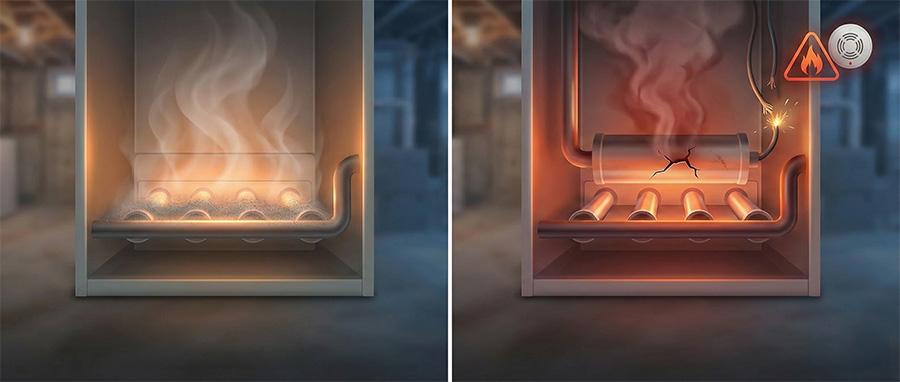
Here’s what happens during the months your furnace sits unused. Dust settles on everything inside the unit, particularly on the heat exchanger, which is the metal component that gets extremely hot when your furnace runs. When you fire up your system for the first time, all that accumulated dust burns off.
This creates a smell that’s distinctive but hard to describe. Kind of like burning paper mixed with hot metal. It’s unpleasant, sure, but it’s not dangerous. The smell should fade within 20-30 minutes as the dust burns away.
How to tell if it’s just dust:
- The smell only happens when you first turn on the heat after weeks or months of not using it
- It fades relatively quickly (within an hour at most)
- It smells like burning dust, not like chemicals, plastic, or rotten eggs
- Your carbon monoxide detector isn’t going off
- Nobody in your house is experiencing headaches, dizziness, or nausea
If this describes your situation, you’re probably fine. Open some windows to air out the house, let the system run for 30 minutes, and the smell should disappear.
The Smells That Mean Something’s Wrong
Not all furnace smells are created equal. Some indicate problems that need immediate attention.
Electrical Burning Smell (Like Burning Plastic or Wires)
This is different from the dust smell. If your furnace smells like melting plastic, burning rubber, or electrical components overheating, shut it down immediately. This could indicate failing wiring, a dying blower motor, or electrical components shorting out.
Turn off your furnace at the thermostat and at the breaker. Call for service before attempting to use it again. Electrical problems can cause fires, and they won’t fix themselves.
Rotten Egg or Sulfur Smell
Natural gas is odorless, so utility companies add mercaptan (which smells like rotten eggs) as a safety measure. If you smell this, you’re smelling a gas leak.
Do not investigate. Do not try to find the leak. Do not turn lights on or off (the spark could ignite gas). Get everyone out of the house immediately and call the gas company from outside. They’ll send someone out 24/7, no charge, to investigate and make sure it’s safe.
This is the one smell you absolutely cannot ignore or wait to address.
Musty or Moldy Smell
This usually means moisture has accumulated somewhere in your system, probably in your ductwork or around your evaporator coil. Mold growing in your HVAC system gets circulated throughout your house every time the system runs.
It’s not an immediate emergency, but it needs professional attention. Breathing mold spores isn’t healthy, especially for people with allergies or asthma.
Chemical or Formaldehyde Smell
If your furnace smells like chemicals, paint thinner, or formaldehyde, your heat exchanger might be cracked. This is serious because a cracked heat exchanger can leak carbon monoxide into your home.
Shut down your system and call for immediate service. Do not run it until a professional has inspected it.
The Carbon Monoxide Reality Check
 Let’s talk about the danger nobody can smell. According to the CDC, carbon monoxide is an odorless, colorless gas that kills without warning. More than 400 Americans die from unintentional CO poisoning every year.
Your gas furnace produces carbon monoxide as a normal byproduct of combustion. When everything’s working properly, that CO safely vents outside through your flue. But if something’s wrong (cracked heat exchanger, blocked flue, improper ventilation), CO can leak into your living space.
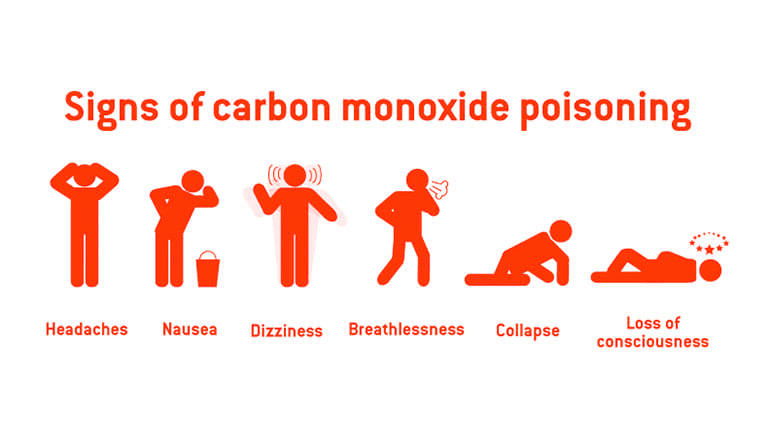
You can’t smell it. You can’t see it. The first symptoms feel like the flu: headache, dizziness, weakness, nausea. The difference? Everyone in the house gets “sick” at the same time, and symptoms improve when you leave the house.
Carbon Monoxide Detector Requirements:
The EPA recommends that every home have CO alarms on each level, outside each sleeping area. These aren’t optional luxury items. They’re life-saving equipment that costs $20-40 at any hardware store.
Test them monthly. Replace batteries twice a year (daylight saving time is an easy reminder). Replace the entire unit every 5-7 years depending on manufacturer recommendations.
What Causes Dangerous Furnace Smells
Understanding what creates these problems helps you prevent them.
Cracked Heat Exchangers
This is the big one everyone worries about. The heat exchanger is a metal chamber that contains the flames from your furnace. Over years of expanding when hot and contracting when cool, metal can develop cracks. These cracks let combustion gases (including CO) escape into your home’s air supply.
Heat exchangers crack from age, corrosion, or running a dirty system that overheats. They’re expensive to replace, often $1,500-2,500, which is why proper maintenance matters.
Blocked or Damaged Flue
Your furnace’s flue pipe carries combustion gases safely outside. If it’s blocked (bird nests are surprisingly common), disconnected, or corroded through, those gases back up into your house instead of venting outside.
This is why annual inspections matter. A technician checks the flue condition and makes sure everything’s connected and venting properly.
Dirty Burners or Inadequate Combustion Air
When furnace burners get dirty or there’s not enough fresh air for proper combustion, the flame burns yellow or orange instead of blue. This incomplete combustion produces more CO and creates soot buildup.
It also reduces efficiency, meaning you’re paying more to heat your home while creating a safety hazard.
The First-Time Furnace Startup Protocol
Here’s what to do when you turn on your heat for the first time each season:
Before You Start:
- Change your filter if you haven’t already
- Make sure CO detectors have fresh batteries and are working
- Clear any items stored too close to your furnace
- Check that your outdoor exhaust vent isn’t blocked
When You Start:
- Open windows for ventilation
- Stay home for the first 30 minutes of operation
- Pay attention to smells, sounds, and how the system behaves
- Watch for smoke coming from vents (there shouldn’t be any)
What’s Normal:
- Burning dust smell that fades within 30 minutes
- Clicking sounds as metal expands
- A slight whooshing sound from air movement
What’s Not Normal:
- Any smell that persists beyond an hour
- Loud banging, grinding, or squealing noises
- Smoke or visible soot
- Flames visible through furnace cabinet (should be contained inside)
- Furnace cycling on and off repeatedly without heating the house
Why Professional Inspection Matters
Look, we get it. Nobody wants to pay for maintenance when nothing’s obviously broken. But here’s what a proper furnace inspection catches before it becomes dangerous:
- Heat exchanger cracks forming but not yet leaking
- Flue pipes starting to corrode or separate
- Burners getting dirty and producing incomplete combustion
- Blower motor bearings wearing out (electrical fire risk)
- Gas line connections developing small leaks
- Exhaust blockages from nests or debris
A trained technician uses specialized equipment to check things you can’t see or smell. They measure CO levels in the flue gases, inspect the heat exchanger with cameras, test gas pressure, and verify proper combustion.
This isn’t about selling you stuff you don’t need. It’s about catching problems while they’re still small, fixable, and before they endanger your family.
The Annual Maintenance Question
Should you get your furnace inspected every year? The EPA, CDC, and pretty much every safety organization says yes. We agree, but let’s be realistic about priorities.
If your furnace is over 10 years old, annual inspection isn’t optional. Older systems have more wear, more corrosion, and higher risk of dangerous failures.
If your furnace is newer but hasn’t been inspected in 2-3 years, get it done this season. Things deteriorate gradually, and problems caught at year 2 or 3 are way cheaper to fix than problems that become emergencies at year 5.
If you had it inspected last fall and everything was perfect, you’ve got some flexibility. But don’t skip more than one year, especially in a climate like ours where systems work hard during both heating and cooling seasons.
When That Smell Means Call Now
Some situations don’t wait for an appointment during business hours:
- Any smell of gas (rotten eggs) requires immediate evacuation and calling the gas company
- Electrical burning smells that persist require shutting down the system
- Any smell accompanied by CO detector alarms
- Chemical smells combined with headaches or nausea
- Visible smoke coming from vents or the furnace itself
For these situations, shut off your furnace (thermostat and breaker), get fresh air circulating, and call for emergency service.
Trust Your Nose, Protect Your Family
At Southeastern Mechanical Services, we’d rather get a call about a burning dust smell that turns out to be nothing than miss a call about a real problem that hurts someone. We’ve been servicing furnaces in Decatur, AL long enough to know the difference between normal startup smells and dangerous situations.
If you’re smelling something from your furnace and you’re not sure if it’s normal, give us a call at 256-686-3444. We can often tell you over the phone whether it’s safe to keep running or if you need immediate service.
And if you haven’t had your furnace inspected recently, now’s the time. Before the real cold hits, before something breaks, before that normal dust smell turns into something worse.
Because the best time to find out your furnace is dangerous is before it actually becomes dangerous.
Important Safety Resources: