It is the first genuinely hot Saturday in June. Your dining room is full, or your sales floor is busy, or your congregation is filing in, and somebody says the words no business owner wants to hear on a Saturday. “Is it just me, or is it warm in here?”
Twenty minutes later it is not just warm, it is uncomfortable. People start leaving. The unit on your roof, the one nobody has thought about in three years, picked the busiest afternoon of the month to quit.
At Southeastern Mechanical Services, we get these calls every summer, and the frustrating part is how often they were preventable. Rooftop units are the most ignored equipment in most commercial buildings, mostly because they are out of sight and out of mind. Nobody walks past one on the way to the break room. Here is what is worth knowing about the system on your roof, before it introduces itself to you the hard way.
Why Rooftop Units Get Neglected
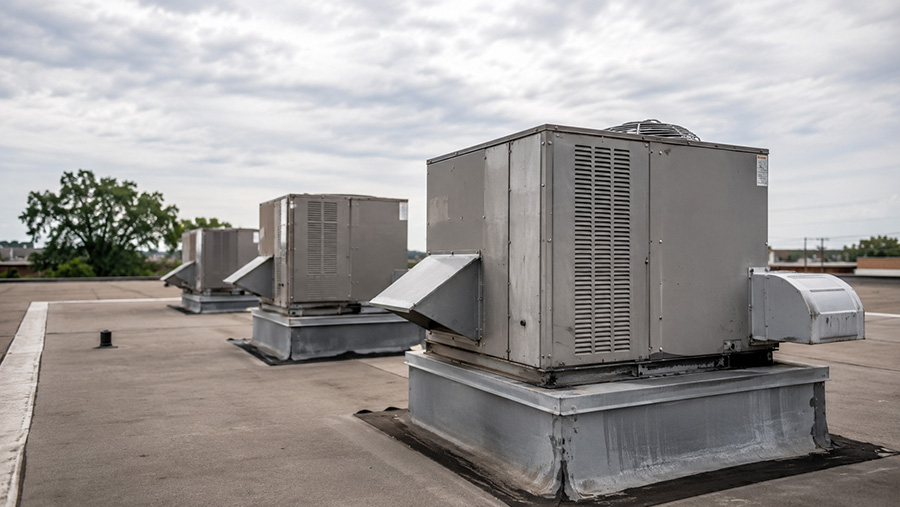
Most small and mid-sized commercial buildings in North Alabama are heated and cooled by packaged rooftop units, often called RTUs. Everything lives in one cabinet on the roof: the compressor, the coils, the blower, and usually the heating section too. Ductwork drops down into the building from there.
It is an efficient way to condition a building, and it keeps noisy equipment away from your customers and staff. The tradeoff is that it is genuinely invisible. A homeowner walks past their outdoor unit every time they mow. A business owner might go years without laying eyes on the equipment keeping the building comfortable.
The other reason these get neglected is that nobody in the building owns the problem. In a house, it is obvious whose job it is. In a business, HVAC tends to fall between the manager, the owner, and the landlord, and it quietly becomes nobody’s until it fails.
What a Failure Actually Costs You
We want to be honest here rather than dramatic. A rooftop unit failure is not a catastrophe for most businesses. It is just expensive in ways that do not show up on the repair invoice.
Lost business during the outage. If your building is uncomfortable, customers leave and staff productivity drops. Depending on what you do, a couple of bad afternoons can easily cost more than the repair itself.
Emergency pricing and parts delays. A failure in the middle of July puts you in line behind everyone else who is also having a bad week. If a part has to be ordered, you are down until it lands. Scheduled work gets scheduled parts. Emergency work gets whatever is available.
Damage that spreads. A lot of major failures start as small problems. A clogged condensate drain overflows and gets into the ceiling. A dirty coil makes a compressor work harder for a year and then it does not. Catching the small thing is almost always cheaper than replacing what the small thing broke.
That is the real case for planned maintenance on commercial equipment. It is not that maintenance makes a unit last forever. It is that it moves the work onto your calendar instead of the equipment’s.
What North Alabama Weather Does to Rooftop Equipment
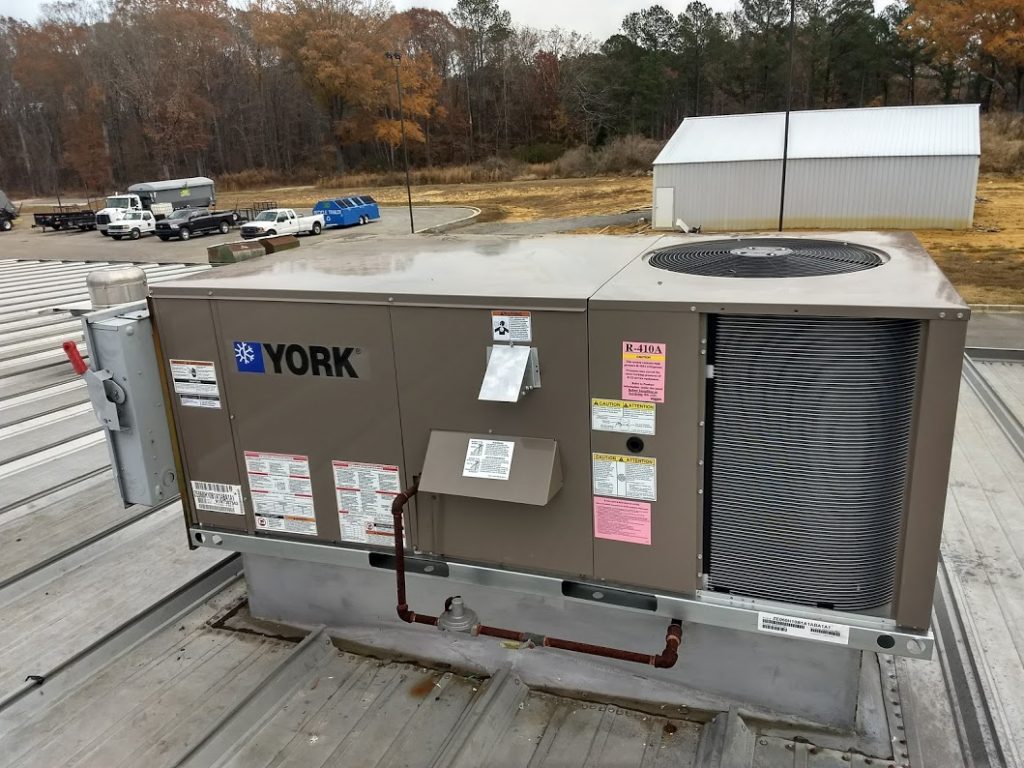
Equipment on a Decatur rooftop lives a harder life than the same equipment would in a milder climate.
Our summers run hot and humid, and dew points sitting above 70 degrees in July mean your system is pulling a serious amount of moisture out of the air on top of the cooling load. That is a lot of condensate moving through drain lines all season, and it is why clogged drains are one of the most common problems we find.
Rooftop units also take the weather with no shelter at all. Sun exposure all day, driving rain, pollen and debris in the spring, and the occasional hard freeze in January. Add in the severe weather this part of the Tennessee Valley sees, and hail or wind damage to coils and panels is a real possibility. After a bad storm, it is worth having someone actually go up and look, because damage on a roof is easy to miss from the ground.
What Should Be on a Commercial Maintenance Schedule
For most buildings, twice a year works well: once before cooling season and once before heating season. Larger buildings, restaurants, or anywhere with heavy runtime often need more.
Here is what actually matters on those visits:
- Coil cleaning, since dirty coils quietly wreck efficiency and shorten compressor life
- Condensate drain clearing and pan inspection, which prevents the ceiling-damage scenario
- Filter changes on a schedule that matches your building, not a generic calendar
- Belt, motor, and bearing inspection on the blower assembly
- Refrigerant charge and pressure checks to catch leaks before they become compressor failures
- Electrical connections, contactors, and safety controls
- Economizer operation, which is frequently found stuck and wasting money
- Heating section and safety checks before winter
- Cabinet, panel, and curb inspection for weather damage and water intrusion
Filters deserve a note of their own. The right change interval depends on your building. A quiet professional office is different from a busy retail floor, and both are different from a restaurant dining room. If your filters are on a schedule somebody guessed at years ago, it is worth revisiting.
Our A.M.P. maintenance program covers this kind of planned service, and for commercial customers it is usually the difference between predictable costs and surprise ones.
Repair or Replace?
This is the question we get most often, and the honest answer is that it depends on more than the unit’s age.
A well-maintained rooftop unit can run a long time. A neglected one can be finished much sooner. Rather than going strictly by the calendar, we look at what the equipment is telling us. Is this the third repair in two years, or the first one ever? Is the compressor involved, or is it a contactor? Is efficiency dropping in a way you can see on the utility bill? Is the cabinet still sound, or is water getting into it?
There is also the refrigerant question. Older commercial equipment often runs on R-410A, which is no longer being manufactured for new systems. It is still perfectly legal to service and recharge, but as supplies tighten over the coming years, refrigerant-related repairs on older units are likely to get more expensive. That does not mean replace anything that still works. It just becomes one more factor when a major repair lands on an older unit.
When we quote a repair on aging equipment, we will lay out both paths and let you decide. Sometimes the repair is clearly right. Sometimes you are better off putting that money toward a system that will not have you back on the phone next summer. We are not going to push you toward the bigger invoice when the smaller one makes more sense.
Questions Worth Asking Before You Sign a Service Agreement
If you are shopping for commercial HVAC service, a few things separate a real maintenance agreement from a piece of paper:
- What is actually included in each visit, in writing, task by task
- How many visits per year, and are they scheduled ahead or do you have to chase them
- What the response time looks like when something fails in peak season
- Whether you get a report after each visit showing what was found and what was done
- Whether their technicians are licensed and trained on current refrigerants and equipment
That last one matters more than it used to. Newer equipment uses refrigerants that require updated training and different tools, so it is a fair question to ask anyone bidding on your building.
When to Call Us Out
A few signs your rooftop equipment needs attention sooner rather than later:
- Rooms in the building that never reach the temperature the thermostat is set to
- Utility bills climbing without a matching change in your hours or occupancy
- Water stains on ceiling tiles below where a unit sits, which usually means a drain problem
- Unusual noise, short cycling, or a unit that runs constantly without satisfying
- Any severe storm that came through with hail or high wind
- You genuinely do not know when the equipment was last serviced
That last one is not a joke. If nobody at your business can say when a technician last opened those panels, that alone is worth a service call. For the situations that will not wait, we also handle emergency service.
Keeping a building comfortable is not glamorous work, but it is the kind of thing your customers only notice when it goes wrong. We would rather help you stay ahead of it than meet you on the worst afternoon of your summer. Southeastern Mechanical Services works with businesses across Decatur, Athens, Hartselle, Trinity, Priceville, Somerville, Mooresville, Austinville, Cullman, and the surrounding North Alabama communities, and we are happy to come take a look at what is on your roof and tell you honestly where it stands. Give us a call at 256-686-3444 or get in touch to set up a visit.